AYSA SARI
STUDIO WELZIJN


Running therapy
Running for your physical mental health
Sometimes it feels like your mind just keeps racing. You worry a lot, are tired, experience stress, or notice that you have less and less energy to do things. It is precisely then that exercise can be incredibly helpful. Not because you have to get fitter or reach a specific goal, but because movement helps you reconnect with yourself.
Involvement at Studio Welzijn

At Studio Welzijn, we use running not as an end goal , but as a means. Running therapy is an accessible form of guidance where gentle exercise, the outdoors, and psychological support come together. As a psychologist and coach, I not only guide you during your exercise but also help you reflect on what you are experiencing and how you can move step by step towards a life that is important to you.
You don't have to be a runner. In fact, most people who start running therapy have little to no experience with running.
For whom?
Running therapy may be suitable if, for example, you:
-
experiences a lot of stress or is heading towards burnout
-
are recovering from burnout
-
suffer from gloominess or depressive symptoms
-
regularly worries or experiences anxiety symptoms
-
have trouble calming down
-
want to learn to take better care of yourself
-
want to experience more energy
-
would like to exercise in an accessible way, but don't know where to start
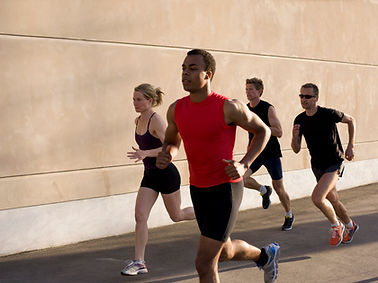
But I have never run...
That is not necessary either. Running therapy is not about being able to run fast or about fitness. We use running primarily as a means, not an end.
We therefore start with walking and short, gentle jogs. And by gentle, we mean – truly gentle. We could actually call it 'jogging therapy'. We work with an accessible build-up schedule, building step by step towards experiences of success, enjoyment, and confidence in your own body.

What is running therapy?
Running therapy is a combination of gentle exercise, psychological guidance, and exercises that contribute to both your mental and physical health.
During a session, we do not run for an hour straight.
We build up gradually with walking, short bursts of running, breathing exercises, and moments of reflection. We also dedicate time to a warm-up, stretching, light muscle strengthening, and a cool-down.
It is not about speed or performance. It is about regaining confidence in your body, experiencing that you can do more than you might have thought, and discovering how movement can support you in daily life.
Why does running therapy work?
Exercise does much more than just improve your fitness. During gentle running and walking, all kinds of processes occur in your body and brain that contribute to your mental health .
Research shows that regular exercise can contribute to, among other things:
-
less stress and tension
-
reduction of anxiety and depressive symptoms
-
a better night's sleep
-
more energy
-
better concentration
-
more self-confidence
-
an improved mood
-
more resilience
Moreover, exercise stimulates the production of substances such as BDNF, serotonin, and dopamine, which contribute to a better mood and the recovery capacity of your brain.
In addition, many people find that the rhythm of movement, the fresh air, and nature help to bring more peace to their minds. Many participants also experience that exercising together is motivating and provides a sense of connection.

The power of movement and ACT
Within my running therapy, I use principles from Acceptance and Commitment Therapy (ACT).
During movement, space often emerges, both literally and figuratively. For example, we explore:
-
what is really important to you
-
which small steps go hand in hand with this
-
how to be kinder to yourself
-
how you can practice letting go of thoughts
What does the process look like?
Running therapy is offered in a small group of 8 to 12 participants. We meet weekly for 8 weeks for a training session of approximately one hour.
Each session consists of a combination of walking, gentle jogging, breathing and mindfulness exercises, and short moments of reflection. We also take time for a warm-up, stretching, muscle toning, and a cool-down.
To get the most out of the program, I ask you to practice independently once a week in addition to the group training. You will receive a simple build-up schedule for this, so that you stay active in a pleasant and manageable way between training sessions.
It is precisely this combination of training together and practicing independently that ensures new habits can form and the positive effects can continue to build up.
Why I provide running therapy
It might be nice to know: I am not a fanatical runner myself. You won't see me running a marathon or training for long distances. In fact, I have come to experience just how much a gentle run can mean for my mental well-being . Getting out of my head for a moment, getting moving, getting fresh air, and noticing that a bit more peace returns.
That is precisely how I want to approach running therapy. Not focused on performance, speed, or technique, but on what movement can mean for your mental well-being.

I don't believe you have to become a runner to experience the positive effects of running.

Practical information & location
The training sessions take place in Vondelpark in Amsterdam: a green environment in the heart of the city. It is precisely the combination of exercising in nature, fresh air, and getting away from the daily hustle and bustle that contributes to relaxation and recovery.
You don't need any special running experience. Comfortable sportswear and good shoes are sufficient.
Costs
The first try-out group starts soon; you can participate at a symbolic rate. The exact costs and start date will be announced shortly.
Keep an eye on the website or send an email already if you are interested. I will then let you know first when registration opens.
In some cases, (part of) the costs can be reimbursed, for example through supplementary health insurance or via a vitality, development, or coaching budget from your employer. Would you like to know if you qualify? Then contact your health insurer or employer to discuss the possibilities.
Good to know
Running therapy is suitable for many people, but you take responsibility yourself to assess whether participation is responsible for you. Are you in doubt due to a medical condition or physical complaints? Then consult your GP, medical specialist, or physiotherapist beforehand to determine whether running therapy is appropriate for you at this time.
Additionally, it is good to know that running therapy can be a valuable addition to psychological treatment or medication, but it does not replace it. When you are undergoing treatment, it can complement the guidance you are already receiving very well.